
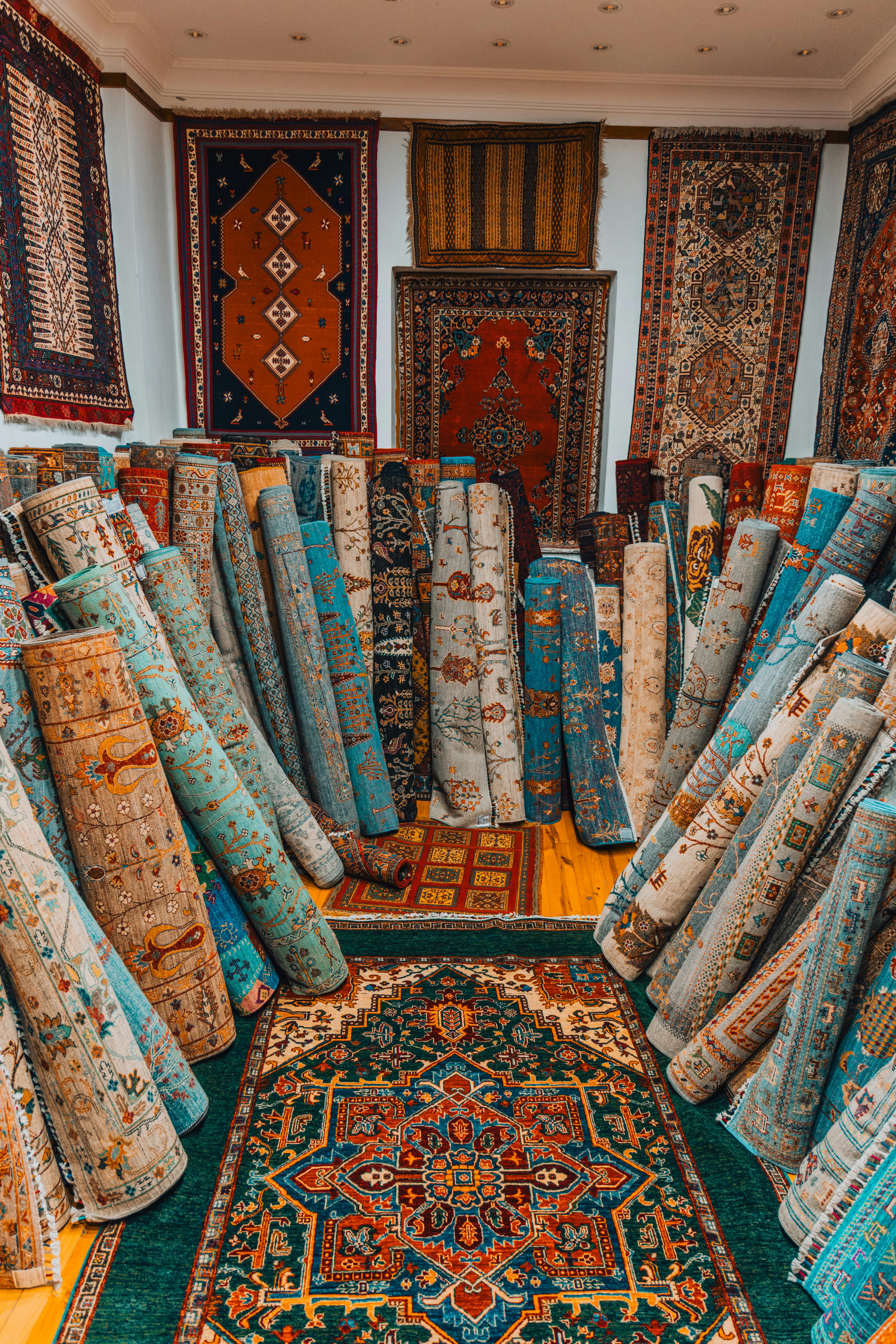
Layering rugs is having a major moment in interior design — and done right, it’s one of the most effective ways to add depth, texture, and personality to a room. Done wrong, it looks like a yard sale.
We get questions about rug layering more often than we did five years ago. The trend filtered down from high-end interiors into mainstream design media, and now people are curious — and sometimes confused about why their attempt at the look didn’t work the way the Instagram photo did. Usually the answer comes down to a few fundamental principles that are easy to explain and make an immediate difference.
Here’s what we’ve observed, told to customers, and seen work in real San Francisco homes.
Why Layering Works Visually
Before the rules, it helps to understand why this technique works at all.
A single rug defines a zone in a room. Two rugs, layered, do something more interesting — they create depth. The eye reads the arrangement as a deliberate composition rather than a utilitarian floor covering. The contrast between the two rugs — in texture, pattern, or scale — creates visual tension that reads as intentional and designed.
The other thing layering does well is solve the size problem in a specific way. Sometimes you have a rug that’s the right character for a room but the wrong size — not quite large enough to anchor the whole seating group. Adding a smaller rug on top creates a focal point within the larger zone. The smaller rug draws the eye to the coffee table or conversation area; the larger rug anchors the perimeter.
Layering also lets you bring together a rug you already have (and can’t easily replace) with a new piece that changes the room’s feeling without requiring you to start over.
The Size Rule
This is the most common mistake and the easiest to state: the two rugs should be clearly different in size. Not subtly different — clearly different.
The base layer rug should be substantially larger. In a living room, this might be a 9×12 or 10×14. The top layer should be noticeably smaller — a 5×7, a 4×6, or even a small accent piece at 3×5. What doesn’t work: two rugs of similar size (8×10 and 6×8, for example) that look like they’re competing for the same space.
The size difference should be obvious enough that the arrangement reads as intentional. If a visitor isn’t sure whether you meant to layer two rugs or just have a rug that’s sliding around on top of another, the size differential isn’t dramatic enough.
Pattern Mixing Principles
The pattern question intimidates people. The actual principle is simpler than it feels.
Geometric over floral, or floral over geometric. The contrast between pattern types is almost always successful. A large-scale tribal geometric rug as the top layer over a soft, open Oushak field is a classic combination. The geometric provides structure and graphic interest; the Oushak provides warmth and gives the geometric room to read.
The reverse works too: a flowing, curvilinear Persian pattern as the base layer, with a bold kilim or tribal rug layered on top. The busier pattern becomes the foundation; the geometric rug on top provides definition.
Avoid two busy patterns of similar scale. Two rugs both packed with intricate detail at similar scales compete visually and produce chaos. One pattern needs to be quieter — either simpler in design or smaller in scale.
Let one rug be the supporting character. In any successful layering composition, one rug is the main event and the other supports it. Usually the top rug (which gets more visual attention) is the more interesting piece; the base rug is quieter and creates the ground. Occasionally it’s the reverse — a spectacular antique base rug with a simple kilim on top to protect it and add texture.
Texture Contrast
Texture contrast is what makes layering feel rich rather than confusing. When both rugs have similar pile height and texture, the arrangement looks accidental. When they’re clearly different, the arrangement reads as designed.
The classic combination: a flatweave kilim as the top layer over a pile rug. The kilim is graphic and thin; the pile rug beneath it is soft and dimensional. Your eye sees the contrast immediately. This is probably the most reliable layering combination we know of.
Other good texture contrasts:
– A chunky, thick-pile Gabbeh or Moroccan rug over a thinner flatweave
– A cowhide over a traditional pile rug (this is striking in the right room)
– A low-pile tribal rug over a lush, plush Oushak
What you’re trying to avoid is two rugs that look and feel identical except for their pattern. The tactile and visual contrast is part of what makes the layering work.
Color Anchoring
The two rugs don’t need to match in color, but they need to be related. At least one color should appear in both rugs — even if it appears differently (as a dominant color in one and an accent in another).
This is how you create harmony without uniformity. A warm terracotta base rug layered with a kilim that uses terracotta as a minor accent color — alongside navy, cream, and black — will look intentional and cohesive. The same base rug layered with a green-and-purple kilim with nothing in common will look like two separate rugs happened to be in the same room.
When in doubt, pick the top rug’s dominant color from the base rug’s color family. Or find the base rug’s minor accent color and make it the top rug’s dominant color.
What Works as the Base Layer
Not every rug works well as the bottom layer in a stack. The most successful base layer rugs have these qualities:
Large, open design. A base rug packed with intricate detail will be visually crowded when another rug is placed on top. Open field designs — Oushak patterns, solid or near-solid fields, simple geometric grounds — give the top rug room to breathe.
Muted or tonal palette. A base rug with a quieter color palette lets the top rug read clearly.
Flat or lower pile. A very thick, high-pile rug as the base layer can cause the top rug to feel unstable and look oddly raised. A low-to-medium pile works better for the base.
The Oushak as base layer. This deserves special mention because it works so consistently. Oushaks — with their open patterns, muted warm tones, and soft palette — are almost ideal base layer rugs. They’re beautiful on their own, and they make excellent supporting characters under tribal rugs, kilims, or small geometric pieces.
What Works as the Top Layer
The top rug is the focal point. It should be:
Smaller and more graphic. A kilim is often the best choice — it’s flat, so it lies cleanly and doesn’t add a lot of height. It’s often graphic and geometric. And it’s practical — kilims are durable and easy to move when you need to clean both rugs.
Tribal or geometric. Small tribal rugs — a Qashqai scatter rug, a Baluch prayer rug, a small Afghan piece — work beautifully as top layer elements. Their bold geometry reads clearly even at small scale.
A cowhide. In rooms with a more rustic or eclectic character, a cowhide layered over a pile rug adds tremendous texture contrast and works in ways that feel current and bold.
The Rug Pad Strategy for Layered Rugs
Standard rug pads go under the base rug — between the base rug and the floor — just as they would for a single rug. This prevents both rugs from sliding.
For the top rug, on carpet or on another rug, use a non-slip pad designed for rug-on-rug use. These are thinner than standard rug pads and are specifically designed to grip without adding height or bulk. Double-sided carpet tape is another option for smaller top rugs that you want to keep absolutely stationary.
If you’re not using a pad on the top rug, at minimum orient both rugs so their pile direction aligns — this reduces the tendency of the top rug to travel across the base rug.
Where Layering Works Best
Living rooms: The ideal context. A large base rug anchors the seating group; a smaller rug over it creates a focal point at the coffee table. This is where the look originated and where it’s most consistently successful.
Bedrooms: A beautiful runner or small tribal rug layered over a larger, softer rug on each side of the bed adds character and makes stepping out of bed feel more interesting. A Moroccan Beni Ourain as the base with a colorful kilim runner layered at the foot of the bed is a classic combination.
Studies and home offices: A smaller top rug can define the desk zone within a larger room.
Where it rarely works: Dining rooms (chairs need to move freely; a two-layer arrangement adds height that chairs catch on) and high-traffic hallways (the top rug will shift constantly and become a tripping hazard). Kitchens almost never work — cleanup is complicated enough with one rug.
Specific Combinations Boga Recommends
Based on what we’ve seen work well for our customers:
A 9×12 Oushak (cream/ivory ground, soft Turkish pattern) with a 4×6 tribal Qashqai centered over the coffee table area — this is one of the most reliably beautiful combinations we know.
A large flatweave kilim as the base layer with a Moroccan Beni Ourain on top — high texture contrast, both patterns complementary in their geometry, warm neutral palette.
A Heriz or geometric Persian as the base, with a small antique tribal piece layered on top — the geometric patterns echo each other at different scales.
For help seeing what might work in your space, come into our showroom at 3499 Sacramento St in San Francisco. We can pull pieces to layer and show you the combinations in person — that’s the only way to really know. We’re open Monday through Saturday, 10am to 5:45pm, or call us at (415) 567-1965.
Boga Rugs — San Francisco’s rug specialists since 2007. Sales, cleaning, repair, and restoration. 3499 Sacramento St, San Francisco, CA 94118.