
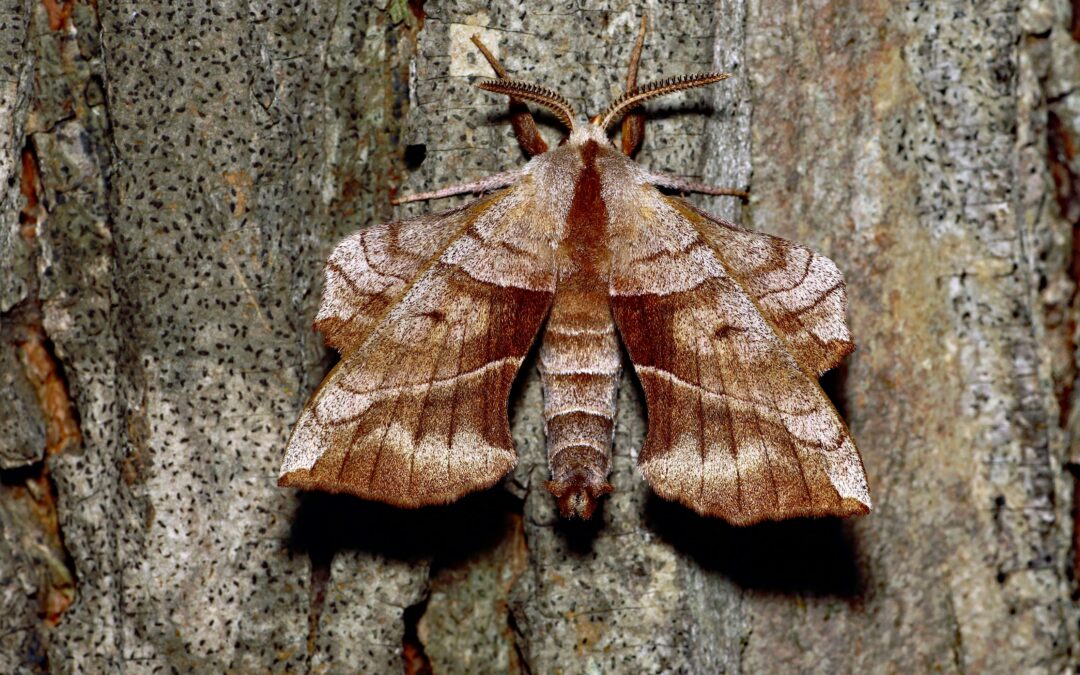
Moths are a quiet problem. They don't announce themselves, don't leave obvious evidence, and by the time you see a patch of bare pile, the larvae have typically been at work for weeks or months. In San Francisco's climate, this can happen any time of year — there's no cold winter to slow them down.
Cengiz has been dealing with moth damage in oriental rugs since 1989. The story he hears most often is almost always the same one: an owner moves a heavy piece of furniture and finds bare patches in the rug underneath. The rest of the rug looks fine. But under the sofa, in the dark, undisturbed and never vacuumed, the larvae had been feeding for a long time.
Why Wool Rugs Are Vulnerable
The adult moth isn't the problem. Clothes moths (Tineola bisselliella) don't eat anything — they exist only to mate and lay eggs. All the damage comes from the larvae, which feed on keratin, the protein found in animal fibers.
Wool is almost pure keratin. From a larva's perspective, a hand-knotted wool rug in a dark corner is an enormous, reliable food source in a safe location. Silk rugs are also at risk, though wool is the preferred material. Cotton and synthetic rugs don't interest them.
Larvae need darkness and no disturbance. Under a sofa, under a bed, in a rolled-up rug in a closet, along the edges of a room where nobody walks — these are the areas they find. The pile in the middle of your living room where people walk every day is almost never where you find damage. It's always the edges, the covered areas, the places you don't look.
What to Look For
Catching this early is the difference between a small repair and a significant restoration. The signs are subtle, but they're there.
Small bald patches. The most common first sign. You'll see areas where the pile is gone and the woven foundation underneath is exposed. These patches usually start small — dime to quarter sized — and almost always appear in low-traffic areas or under furniture.
Cocoon casings. Larvae spin small silky tubes around themselves while feeding. They look like tiny cylinders, roughly the size of a grain of rice, off-white, sometimes with wool fibers worked into them. Check along the rug's perimeter and under furniture edges.
Fine sandy powder. Larval droppings look like gritty residue in roughly the same color as the rug's wool. If you find this concentrated in an area, inspect the pile around it carefully.
Adult moths in the room. Clothes moths are small, about half an inch, golden or buff-colored. They avoid light and tend to run along the floor rather than fly. If one flutters out when you move furniture or lift a corner of a rug, don't dismiss it.
Webbing. In heavier infestations, you may see fine silky webbing on the surface or underside of the rug, especially in corners.
The Lifecycle
A female clothes moth lays 50 to 100 eggs directly on the wool. The eggs are tiny and nearly invisible. They hatch in 4 to 10 days, and the larvae begin feeding immediately.
The larval stage is where all the damage happens, and it can last anywhere from one month to over a year depending on temperature and conditions. Warmer conditions accelerate development. Cooler temperatures slow it — but in San Francisco, which rarely drops below 40 degrees, moth larvae can remain active continuously throughout the year.
After feeding, larvae pupate in their cocoons for 1 to 4 weeks, then emerge as adults to start the cycle again. In a temperature-controlled home, there's no seasonal interruption to this.
This is where San Francisco rug owners have it harder than most. In Chicago, Minneapolis, or Boston, harsh winters kill most active moth populations and give rugs several months of natural protection each year. San Francisco doesn't have this. If moths get established in your home, they can cycle continuously without any cold-weather interruption.
Which Rugs Are Most at Risk
The biggest risk factor isn't the rug — it's how the rug is used.
Any area under heavy furniture is the highest-risk zone. The section of your rug beneath a sofa is dark, undisturbed, and (in most homes) never vacuumed. Same goes for under beds, large cabinets, or any piece that rarely moves.
Stored rugs are extremely vulnerable. Months in a dark space with zero disturbance and no airflow is exactly what moth larvae want. Rugs going into storage need to be cleaned first and checked regularly while stored.
Rarely used rooms carry more risk than well-trafficked ones. A guest bedroom or formal sitting room where the rug sits for weeks without foot traffic or vacuuming is more susceptible than a living room where people walk on the rug every day.
In San Francisco specifically, the fog belt neighborhoods — Sunset, Richmond, parts of the outer Marina — have more consistent humidity than the rest of the city. This doesn't directly attract moths, but slightly elevated moisture levels can make conditions more favorable for larval activity.
Prevention
Vacuuming is your primary tool, and most people don't do it correctly.
Vacuum the top of the rug weekly under normal conditions. Every month or two, flip the rug and vacuum the back as well. This physically removes eggs and larvae before they can establish. Pay attention to edges, corners, and the areas along the rug's perimeter — this is where early activity concentrates.
For areas under furniture you can't easily reach, use a vacuum wand to get as far under as possible, or shift the furniture out periodically and vacuum the hidden section properly. Every six months, moving heavy pieces even a few inches gives you access to the highest-risk zone.
Pheromone traps work well as a monitoring tool. They attract adult male moths using synthetic pheromones. If moths are showing up in the trap, you have activity and should inspect your rugs. They won't stop an infestation — they only catch males, not females or larvae — but they tell you when something is happening.
Cedar and lavender get recommended often. Cengiz's honest view: in an enclosed space like a cedar closet, cedar oils can have some repellent effect. In an open room, they're not strong enough to protect a rug. The oils dissipate quickly and neither is a substitute for regular vacuuming.
Rotating rugs every six months changes which areas receive light and foot traffic, which disrupts the stable, dark conditions larvae prefer. When rugs come in for professional cleaning, we inspect for moth activity as a matter of routine — we catch early infestations regularly during cleaning appointments, often before the owner has noticed anything.
If You Find Moths
Act the same day. Move the affected rug away from other rugs and wool items immediately — moths spread, and isolation is the first step. Vacuum both sides of the rug thoroughly and empty the canister or bag into an outdoor trash bin right away. Then check every other rug and wool textile in your home.
Call us at (415) 567-1965. For active infestations we prioritize getting rugs in quickly. Describe what you're seeing and we'll advise on the best next step.
Any bare patches or eaten areas in the rug itself can often be repaired — small areas can be rewoven, larger damage takes more involved restoration. But repair is only meaningful once the infestation is stopped.
Treatment Options
For most moth cases, we do a deep professional wash that removes larvae, eggs, and debris from both sides of the rug, followed by treatment that kills remaining organisms and deters re-infestation. This handles the large majority of cases we see.
For severe infestations, targeted insecticide treatment may be necessary. For very delicate pieces — older silk rugs where chemical treatment carries real risk — controlled freezing at extremely low temperatures for a sustained period kills all life stages without damaging the rug.
Storing a Rug
If you need to put a rug away for any length of time, have it professionally cleaned first. Moths are attracted to soil and organic matter already in the wool. A dirty rug in storage is a significantly higher risk than a clean one.
Wrap it in acid-free paper, cotton sheeting, or a breathable fabric cover. Not plastic — plastic traps moisture and, counterintuitively, creates better conditions for larvae by sealing the rug away from any air movement. Add cedar blocks or moth deterrent sachets inside the wrapping as an additional layer.
Store somewhere climate-controlled. Attics get too hot in summer. Garages have humidity swings. Basements often have moisture problems. An interior closet or a climate-controlled storage unit is better.
Roll the rug around a tube rather than folding it. Folding creates stress points in the fibers and forms dark pockets along the fold lines. And check stored rugs every three to six months — unroll, inspect, vacuum lightly, re-roll. Most moth damage in stored rugs happens to owners who skipped this step.
If you suspect moth activity or want a professional inspection, bring the rug to our showroom at 3499 Sacramento St, or call us at (415) 567-1965. Free pickup and delivery throughout San Francisco and the East Bay.
Boga Rugs — San Francisco's rug specialists since 2007. Open Monday through Saturday, 10am to 5:45pm.
We provide pickup and inspection throughout San Francisco and the Bay Area, including Presidio Heights, Hillsborough, Pacific Heights, and Marina District.