
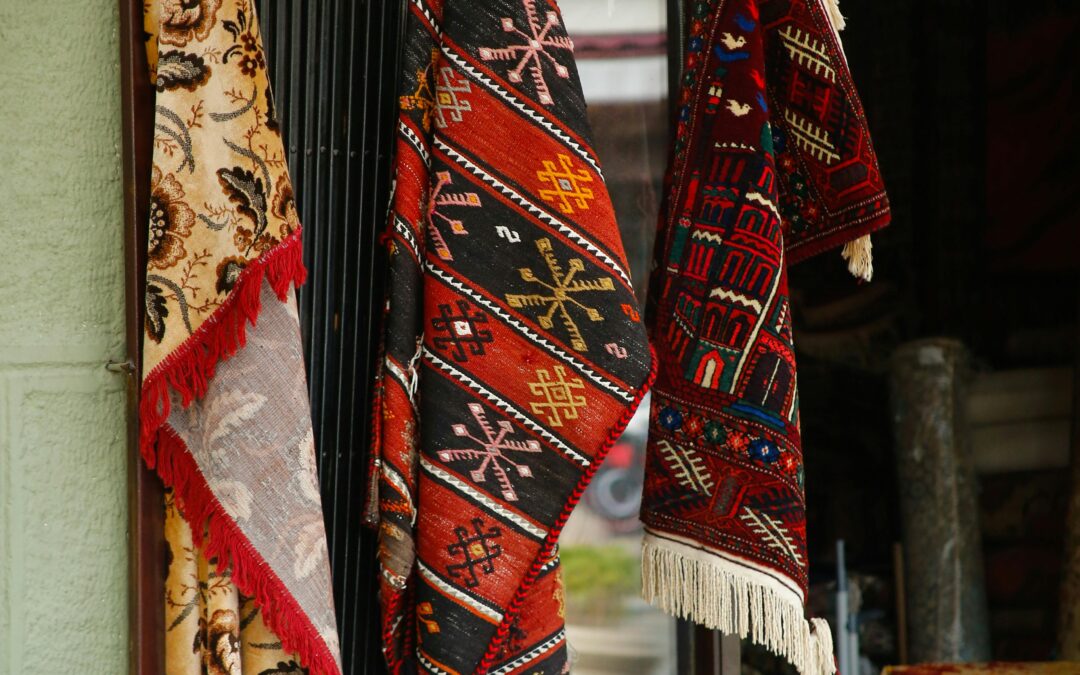
Rug fringe is probably the most misunderstood part of an oriental rug. Most people think it's decorative — a nice finishing touch, like a tassel on a pillow. It's not. On a genuine hand-knotted rug, fringe is structural. It's the exposed ends of the warp threads that hold the entire rug together.
When fringe deteriorates, the rug is losing its structural edge. When fringe falls off, the rug is unraveling. Understanding what fringe is and how to care for it is one of the most practical things any rug owner can learn.
What Fringe Actually Is
A hand-knotted rug is woven on a loom. The loom holds a set of vertical threads under tension — these are the warp threads. Horizontal threads (the weft) are woven between the warp threads, and the knots that form the pile are tied around pairs of warp threads.
When the rug is finished and cut from the loom, the warp threads extend beyond the edges of the weaving at both ends. These exposed threads are the fringe. Fringe isn't added. It isn't sewn on. It isn't decorative trim glued to the edge. It's the foundation of the rug, exposed. Every fringe thread runs all the way through the body of the rug, forming part of the structural skeleton that holds the knots in place.
This is why damaged fringe is a structural problem, not a cosmetic one.
Why Fringe Matters
Here's what happens when fringe deteriorates: the warp threads that hold the last rows of knots in place lose their anchor. Without that anchor, those knots begin to work loose. The last row falls out, then the next row, then the next. The rug shortens, the pile unravels, and the damage accelerates over time.
This process is slow at first — you might lose a quarter inch of rug over a year or two. But it's progressive. Each row that loosens makes the next row more vulnerable. Left unaddressed for years, fringe damage can cost a rug several inches of length.
The good news: fringe repair is one of the most straightforward and cost-effective repairs in the rug business. Catching it early — before the pile starts unraveling — is the best-case scenario.
Types of Fringe
Natural fringe. The warp threads are left as-is after the rug is cut from the loom. Usually cotton, several inches long. Common on many Turkish and Persian rugs.
Knotted fringe. Warp threads tied into small knots to prevent unraveling. Very common and provides slightly more structural security than natural fringe.
Wrapped or overcasted fringe. The base of the fringe is wrapped with additional thread, creating a reinforced band. The most structurally secure treatment, common on higher-quality rugs.
Machine-sewn fringe (important distinction). Many commercial rugs have fringe sewn onto the finished edge rather than being part of the warp. This is purely decorative — if it falls off, the rug is structurally fine. Knowing whether your fringe is structural or decorative matters enormously.
How to Tell If Your Fringe Needs Attention
Thinning. Compare the fringe at both ends of the rug. If one end has noticeably fewer or thinner threads, that end is deteriorating.
Shortening. Fringe that used to be three inches long and is now one inch has been breaking off. The remaining fringe is also compromised and will continue to shorten.
Fraying. Individual threads splitting into fibers, often caused by foot traffic, vacuum damage, or age.
Missing sections. Gaps where threads are completely absent. This is urgent — the pile is either already unraveling or about to start.
Knotting or tangling. A tangled mess from foot traffic or vacuuming stresses threads and accelerates breakage.
The "To Trim or Not to Trim" Debate
Some rug owners, frustrated with fringe maintenance, ask: "Can I just cut it short?" The short answer: you can, and it's not the worst thing you can do. But it's not the best either.
What trimming does well. It creates a clean look and eliminates the tripping hazard of long, floppy fringe.
What trimming doesn't do. It doesn't fix structural problems. If the warp threads are weakening, cutting them shorter just shortens the countdown to when the rug starts unraveling.
Our recommendation. If the fringe is structurally sound but cosmetically messy, trimming is fine. If the fringe is structurally compromised (brittle, thinning, breaking), don't just trim it — get it properly repaired. Trimming a failing fringe is like cutting the dead leaves off a dying plant and calling it healthy.
Fringe Repair Options
Hand reconstruction. The gold standard. A skilled reweaver extends or replaces the warp threads by hand, creating new fringe that's structurally continuous with the rug's foundation. This is the most durable method and the most appropriate for valuable or antique rugs.
Machine overcasting. The edge is secured with a machine-sewn overcast stitch that binds the warp threads together. Faster and less expensive than hand reconstruction, acceptable for moderately valuable rugs.
Replacement fringe. Pre-made fringe sewn onto the rug to replace lost fringe. Cosmetically adequate but not structural — the replacement sits on top of the edge rather than being continuous with the warp. Acceptable for everyday rugs, not recommended for valuable pieces.
Prevention: Making Your Fringe Last
Use a rug pad. A quality rug pad cut slightly smaller than the rug (so the fringe lies flat on the floor beyond the pad's edge) protects fringe from being ground into the floor by foot traffic.
Vacuum away from fringes. Always vacuum toward the center of the rug, never over the fringes. A vacuum's beater bar can catch and pull threads, causing immediate damage.
Keep fringe clean. Dirty fringe deteriorates faster — soil particles act as an abrasive between fibers. During professional cleanings, fringe should be specifically cleaned.
Don't tuck fringe under the rug. Folding fringe under puts a crease at the transition point between pile and fringe — exactly the spot most vulnerable to damage.
When to Bring It to Boga vs. When to Wait
Bring it now: Missing sections of fringe, actively unraveling pile at the rug's edge, fringe that's broken down to nubs, or any situation where you can see the foundation exposed at the rug's end.
Bring it at your next convenience: Fringe that's yellowed or dirty (address during next professional cleaning), fringe that's tangled but not breaking, or minor shortening you've noticed over time.
Monitor at home: Fringe that's in good condition but showing the earliest signs of age. Keep vacuuming carefully, keep the fringe clean, and bring it in when you notice it progressing.
If you're not sure where your fringe falls on this spectrum, bring the rug by our showroom at 3499 Sacramento St in San Francisco. We'll take a look and tell you honestly whether it needs attention now or can wait. No charge for the assessment, no pressure. See our rug repair service for full details on what fringe repair involves and typical costs.
Call us at (415) 567-1965. We're open Monday through Saturday, 10am to 5:45pm. Free pickup and delivery throughout San Francisco and the East Bay.